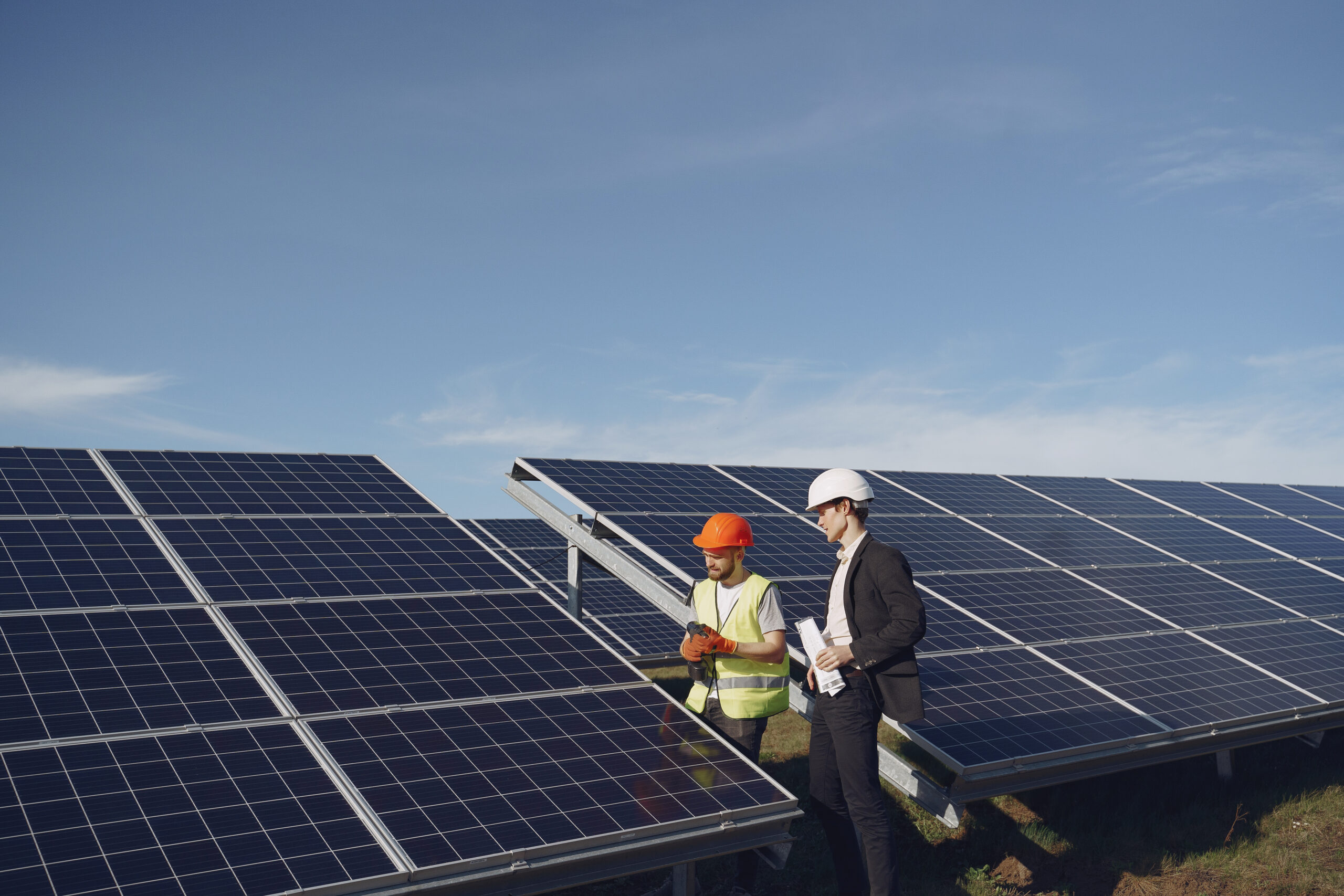

India is accelerating its transition toward renewable energy, and solar power is at the forefront of this revolution. Among the various project sizes available in the market, a 5MW solar power plant has emerged as one of the most popular choices for industries, large commercial establishments, landowners, and independent power producers. It offers the ideal balance between scale, investment, and profitability.
If you are planning to invest in a utility-scale solar project and want to understand the 5MW solar power plant cost in India, this guide will walk you through everything you need to know, from the total investment required to key cost factors, land requirements, expected returns, and available financial incentives.
What is a 5MW Solar Power Plant?
A 5MW solar power plant is a large-scale photovoltaic (PV) facility capable of generating 5,000 kilowatts of electrical power at peak capacity. It is classified as a utility-scale or commercial-scale project and is typically installed as a ground-mounted system, though industrial rooftop deployments are also possible in some cases.
Unlike residential rooftop solar systems that typically range from 3kW to 10kW, a 5MW plant is designed to serve entire factories, industrial campuses, or to supply electricity directly to the grid through open-access or Power Purchase Agreements (PPAs). In terms of daily electricity generation, a well-designed 5MW plant produces approximately 20,000 to 22,000 units (kWh) per day under average Indian solar irradiation conditions.
This capacity makes it highly suitable for:
- Large manufacturing plants and industrial units
- Data centers and IT parks
- Educational institutions and hospitals covering large campuses
- Entrepreneurs and landowners looking to set up solar farms
- Government buildings and public sector undertakings
5MW Solar Power Plant Cost in India: Total Investment Overview
The 5MW solar power plant cost in India typically ranges between Rs. 18 crore to Rs. 25 crore for a complete, grid-connected installation in 2026. This range reflects variations in component quality, project location, type of installation, and the engineering procurement and construction (EPC) contractor selected.
Below is a broad cost overview based on current market benchmarks:
| Capacity | Estimated Total Cost (INR) | Cost Per Watt (Approx.) |
| 5MW (Ground-Mounted) | Rs. 18 Crore to Rs. 25 Crore | Rs. 36 to Rs. 50 per watt |
| 5MW (Industrial Rooftop) | Rs. 20 Crore to Rs. 27 Crore | Rs. 40 to Rs. 54 per watt |
| 5MW (Hybrid with Battery) | Rs. 28 Crore to Rs. 38 Crore | Rs. 56 to Rs. 76 per watt |
Note: These figures are indicative and based on 2026 market data. Actual costs depend on multiple project-specific variables discussed below.
Component-Wise Cost Breakdown for a 5MW Solar Plant
Understanding where the money goes helps investors make smarter decisions. Here is a detailed breakdown of the major cost components:
1. Solar Panels (Modules)
Solar panels are the largest single cost component, typically accounting for 45 to 55 percent of the total project cost. For a 5MW plant, you require approximately 10,000 to 12,500 solar panels depending on the wattage rating of each panel (commonly 400W to 540W per panel today).
Monocrystalline PERC and TOPCon modules are the preferred choice for large-scale projects due to their higher efficiency. Module costs currently range between Rs. 18 to Rs. 22 per watt, placing the total solar panel cost for a 5MW plant at roughly Rs. 9 crore to Rs. 11 crore.
2. Solar Inverters
Inverters convert direct current (DC) electricity generated by solar panels into alternating current (AC) used by appliances and the grid. For a 5MW project, string inverters or central inverters are commonly used. Central inverters are more cost-effective at this scale.
Inverter costs for a 5MW project typically fall between Rs. 1.5 crore and Rs. 2.5 crore, depending on the brand and technology.
3. Mounting Structures
Ground-mounted installations require galvanized iron (GI) or hot-dip galvanized steel mounting structures. The cost of mounting structures for a 5MW plant typically ranges from Rs. 1.5 crore to Rs. 2.5 crore. The type of terrain, soil conditions, and whether fixed-tilt or single-axis trackers are used also influence this cost.
For high-quality mounting structure supply tailored to large solar projects, you can explore options through Unify Solar’s product and services page, which covers GI solar structures along with complete installation support.
4. Balance of System (BOS) Components
Balance of System includes all electrical and civil components beyond panels, inverters, and mounting structures. This covers DC and AC cables, earthing systems, lightning arrestors, combiner boxes, protection relay systems, SCADA-based monitoring systems, and switchgear.
BOS costs for a 5MW plant typically add up to Rs. 2 crore to Rs. 3 crore.
5. Civil and Structural Work
This covers site preparation, leveling, fencing, cable trenching, control room construction, and access roads. Civil work costs range from Rs. 50 lakh to Rs. 1 crore depending on site conditions.
6. Grid Interconnection and Metering
For grid-connected systems, there are costs associated with grid interconnection, high-tension transmission lines, transformation equipment, and net metering or open-access approvals. This cost can range from Rs. 50 lakh to Rs. 1.5 crore depending on the distance from the nearest substation.
7. Project Development and EPC Charges
EPC contractors charge for design, engineering, procurement, and installation services. Professional EPC charges typically range from 8 to 12 percent of the total project cost, which translates to approximately Rs. 1.5 crore to Rs. 3 crore for a 5MW plant.
Land Requirement for a 5MW Solar Plant
Land is a critical factor in determining both project feasibility and total investment. As a general rule, a 5MW ground-mounted solar project requires approximately 20 to 25 acres of land.
Factors that affect land requirement include:
- Panel tilt angle and inter-row spacing to avoid shading
- Local terrain and topography
- Use of solar trackers (which require more space than fixed installations)
- Panel efficiency and wattage rating
In states with high land costs such as Maharashtra, Haryana, and Delhi NCR, land acquisition can add significantly to the project budget. In solar-friendly states such as Rajasthan, Gujarat, Madhya Pradesh, and Andhra Pradesh, land is more affordable and solar irradiation levels are also higher, making these locations ideal for ground-mounted plants.
Factors That Affect the 5MW Solar Power Plant Cost
Several variables can cause the total cost to rise above or fall below the average range. Understanding these factors helps project developers make more accurate financial projections.
Location and Solar Irradiation
States with higher solar irradiation, typically in western and southern India, generate more electricity per installed MW compared to northern states. A plant in Rajasthan or Gujarat produces more annual units than one in a low-irradiation state, improving the financial case. However, these states may also have higher land transport and logistics costs due to remote locations.
Type of Solar Panels
Monocrystalline panels cost more upfront but deliver higher efficiency and longer performance stability, especially in high-temperature environments. Polycrystalline panels are cheaper but less efficient. Bifacial modules, which generate power from both sides, are increasingly being adopted for large-scale projects as they improve yield without proportional cost increases.
On-Grid vs. Off-Grid vs. Hybrid Systems
An on-grid (grid-tied) 5MW solar plant is the most cost-effective as it does not require battery storage. Adding battery backup through lithium-ion or lead-acid storage systems can increase total project cost by 30 to 70 percent depending on the capacity of energy storage installed.
Use of Solar Trackers
Single-axis solar trackers follow the movement of the sun throughout the day, increasing energy generation by 20 to 25 percent compared to fixed-tilt systems. However, they add Rs. 2 crore to Rs. 4 crore to the installation cost. Whether the additional generation justifies the higher investment depends on the project’s location and electricity tariff.
EPC Contractor and Component Brands
The choice of EPC contractor significantly affects both cost and quality. Established contractors with proven project experience may charge more but deliver better engineering standards, reducing long-term maintenance issues. Similarly, premium panel brands with longer performance warranties can justify a higher upfront investment.
Government Subsidies and Financial Incentives for 5MW Solar Plants
A key consideration for any large-scale solar investment is the availability of government support. While direct capital subsidies are not typically available for plants above 1MW in the commercial and industrial category, several indirect financial benefits significantly improve project economics.
Accelerated Depreciation Benefit
One of the most powerful financial incentives available for solar projects in India is the 40 percent accelerated depreciation benefit under the Income Tax Act. Businesses that install solar plants can claim 40 percent of the asset value as depreciation in the first year, substantially reducing their tax liability and improving cash flows.
GST Benefits and Concessional Import Duties
Solar panels and key solar equipment are subject to concessional Goods and Services Tax (GST) rates compared to conventional industrial equipment. This reduces the effective procurement cost of major components.
Net Metering and Open Access
Grid-connected 5MW plants can operate under open-access regulations, allowing businesses to sell surplus power to other commercial buyers or feed it into the state grid. Open-access solar enables third-party power purchase agreements at rates lower than DISCOM tariffs, creating an additional revenue stream or cost-saving opportunity.
State-Level Solar Policies
Many state governments offer additional incentives such as wheeling and transmission charge waivers, banking facilities for generated solar energy, single-window clearance for project approvals, and low-cost land leases for solar parks. States like Rajasthan, Gujarat, Karnataka, and Andhra Pradesh have particularly supportive solar policies for large-scale investors.
5MW Solar Plant: Energy Generation and Revenue Potential
A 5MW solar power plant, operating under average Indian solar conditions with about 4.5 to 5.5 peak sun hours per day, can generate approximately 20,000 to 27,000 units (kWh) of electricity per day. On an annual basis, this translates to roughly 7 to 9 million units (7 to 9 MWh) of clean electricity.
In terms of financial returns, the projected annual revenue depends on whether the plant is used for captive consumption or power sale. Here is a realistic projection:
| Revenue Model | Estimated Annual Revenue (INR) | Notes |
| Captive Use (Replacing Grid Power) | Rs. 2 to 3.5 Crore | Based on avoided cost of Rs. 8-12 per unit |
| Open Access Power Sale | Rs. 1.5 to 2.5 Crore | Based on PPA tariff of Rs. 3-4 per unit |
| Grid Feed-In (DISCOM Tariff) | Rs. 1 to 1.75 Crore | Varies by state solar tariff orders |
Based on these projections, the typical payback period for a 5MW solar power plant in India is 5 to 8 years, after which the plant continues to generate electricity with minimal operational costs for 20 to 25 years.
How to Reduce 5MW Solar Power Plant Cost Without Compromising Quality
Savvy investors and project developers follow several strategies to optimize the 5MW solar power plant cost without sacrificing system performance or reliability.
- Choosing the right location with high solar irradiation reduces the number of panels needed to meet generation targets.
- Buying components in bulk or through centralized procurement reduces per-unit costs.
- Selecting an experienced EPC partner reduces the risk of rework, delays, and substandard installations.
- Leveraging accelerated depreciation and open-access benefits to improve the financial profile of the project.
- Opting for on-grid systems without battery backup where grid reliability is adequate.
Unify Solar’s solar design and consultancy service can assist project developers in performing techno-commercial feasibility analysis, helping clients identify the most cost-effective system configuration for their specific requirements.
5MW Solar Plant vs. Smaller Capacities: Is It the Right Investment?
Many industrial businesses and commercial establishments consider 5MW the minimum viable scale for meaningful electricity cost savings and investment returns. Compared to smaller installations:
| Parameter | 500 kW Plant | 1 MW Plant | 5 MW Plant |
| Approx. Cost (INR) | Rs. 1.8 to 2.5 Crore | Rs. 3.5 to 5 Crore | Rs. 18 to 25 Crore |
| Daily Generation (Units) | ~2,000 units | ~4,500 units | ~20,000+ units |
| Economies of Scale | Limited | Moderate | Strong |
| Grid Export Feasibility | Minimal | Limited | Full Open Access |
The 5MW scale benefits from stronger economies of scale, lower per-watt installation costs, and better eligibility for open-access power trading, making it a preferred entry point for businesses with significant electricity consumption above 5 lakh units per month.
Step-by-Step Process to Set Up a 5MW Solar Power Plant
Setting up a 5MW plant involves several stages, each of which must be executed carefully to ensure regulatory compliance and optimal system performance.
Step 1: Site Assessment and Feasibility Study — Evaluate land availability, solar irradiation data, grid proximity, and local regulations.
Step 2: System Design and Engineering — Create a detailed solar PV system layout, including panel placement, inverter sizing, cable routing, and shadow analysis.
Step 3: Regulatory Approvals — Obtain clearances from the State Electricity Regulatory Commission (SERC), DISCOM, environment ministry (if applicable), and local authorities.
Step 4: Procurement and EPC Contracting — Finalize component suppliers and an EPC contractor with demonstrated experience in large-scale solar projects.
Step 5: Installation and Commissioning — Civil work, mounting structure installation, panel mounting, electrical wiring, inverter installation, and testing.
Step 6: Net Metering or Open Access Connection — Obtain synchronization approval and complete grid interconnection formalities.
Step 7: Monitoring and Operations — Deploy a SCADA-based remote monitoring system to track generation performance, detect faults, and ensure optimal output.
For an in-depth understanding of the solar installation process, refer to this step-by-step solar panel installation guide published by Unify Solar, which covers the end-to-end process from site assessment to system commissioning.
Conclusion
A 5MW solar power plant is a significant but highly rewarding investment for businesses, landowners, and independent power producers in India. With total costs typically ranging between Rs. 18 crore and Rs. 25 crore, the plant can deliver consistent electricity generation for 25 or more years, offering payback periods of 5 to 8 years depending on the project model and location.
The 5MW solar power plant cost in India has been declining steadily due to falling module prices, improved manufacturing efficiencies, and increasing competition among EPC contractors. Combined with strong government support through open-access policies, accelerated depreciation benefits, and state-level solar incentives, this is one of the most financially attractive renewable energy investments available today.
Whether you are an industrial consumer looking to reduce electricity costs or an investor evaluating a solar farm project, partnering with an experienced solar EPC company ensures your project is designed, installed, and commissioned to the highest standards for maximum returns.
Frequently Asked Questions
Q1. What is the cost of a 5MW solar power plant in India?
The 5MW solar power plant cost in India ranges between Rs. 18 crore and Rs. 25 crore for a complete grid-connected system in 2026.
Q2. How much land is required for a 5MW solar plant?
A 5MW solar power plant typically requires 20 to 25 acres of open land for a standard ground-mounted installation.
Q3. How many units does a 5MW solar plant generate per day?
A 5MW solar plant generates approximately 20,000 to 22,000 units (kWh) of electricity daily under average Indian solar irradiation.
Q4. What is the ROI and payback period for a 5MW solar plant?
The typical payback period is 5 to 8 years, after which the plant generates electricity at near-zero operating cost for 25 years.
Q5. Is there any subsidy for a 5MW solar power plant in India?
No direct capital subsidy is available for 5MW+ plants. However, 40 percent accelerated depreciation under the Income Tax Act is a major financial benefit for eligible businesses.