
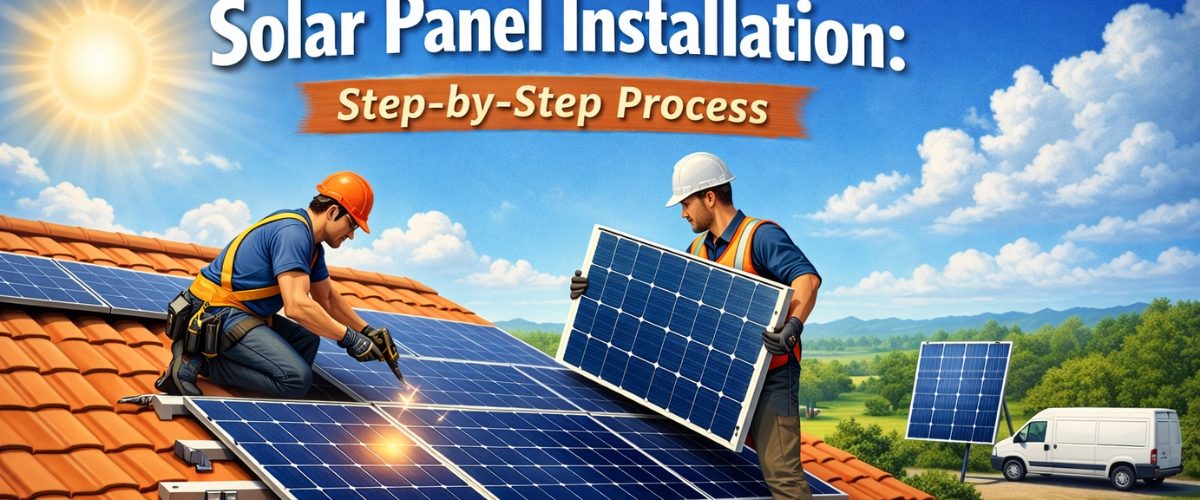
Solar energy is becoming one of the most popular renewable energy solutions for homes and businesses. Installing solar panels allows you to generate clean electricity from sunlight, reduce electricity bills, and contribute to a greener environment. However, many people wonder how solar panels are actually installed.
In this guide, we will explain the solar panel installation process step by step, from planning and site inspection to system activation. Understanding these steps helps homeowners make informed decisions before investing in a solar energy system.
What Is Solar Panel Installation?
Solar panel installation refers to the process of setting up a solar photovoltaic (PV) system that converts sunlight into usable electricity. The system includes several components such as solar panels, mounting structures, inverters, wiring, and sometimes batteries.
A properly installed solar system can generate electricity for 20–25 years or more, making it a long-term energy investment.
Solar Panel Installation: Step-by-Step Process
Below are the main stages involved in installing a solar power system.
1. Site Assessment and Solar Feasibility Study
The first step in solar installation is evaluating whether the location is suitable for solar power.
During the site survey, technicians analyze:
- Roof orientation and tilt angle
- Available installation space
- Structural strength of the roof
- Shading from nearby buildings or trees
- Daily sunlight exposure
This assessment helps determine the system size, number of solar panels required, and expected energy generation.
2. Designing the Solar System
Once the site evaluation is completed, experts design a customized solar power system.
The design stage includes:
- Determining the system capacity (kW)
- Selecting the number and type of solar panels
- Deciding the layout of panels
- Choosing the appropriate inverter
- Estimating electricity generation
A proper system design ensures maximum efficiency and optimal energy output.
3. Permits and Documentation
Before installation begins, the required permissions and documentation must be completed.
This process may include:
- Government approvals
- Utility company permissions
- Net metering applications
- Electrical safety certifications
These approvals ensure the solar system complies with local regulations and safety standards.
4. Installation of Mounting Structure
The mounting structure acts as the foundation for solar panels.
Key features of the mounting system:
- Installed on rooftops or ground surfaces
- Designed to withstand wind, rain, and weather conditions
- Positioned at an optimal tilt angle for sunlight exposure
In the Northern Hemisphere, solar panels usually face south for better sunlight capture.
A strong mounting structure improves system durability and long-term performance.
5. Solar Panel Installation
After the mounting structure is installed, the solar panels are fixed onto it.
During this stage:
- Panels are carefully placed on the mounting frame
- Bolts and clamps secure the panels firmly
- Proper alignment ensures maximum sunlight absorption
Correct positioning of panels is essential to achieve high energy production.
6. Electrical Wiring
Next, technicians perform the electrical connections between the solar panels and the inverter.
Important steps include:
- Using solar connectors such as MC4 connectors
- Connecting panels in series or parallel
- Ensuring proper insulation and grounding
Series vs Parallel Connection
Series connection
- Positive terminal connects to negative terminal
- Increases voltage
Parallel connection
- Positive connects to positive
- Negative connects to negative
- Maintains voltage but increases current
These connections ensure efficient electricity flow within the system.
7. Installing the Solar Inverter
The solar inverter is one of the most important components of a solar system.
Solar panels produce Direct Current (DC) electricity, but homes use Alternating Current (AC) electricity. The inverter converts DC electricity into AC power so it can be used by household appliances.
Common inverter types include:
- String inverters
- Microinverters
- Hybrid inverters
8. Connecting the Solar Battery (Optional)
Some solar systems include battery storage.
Solar batteries:
- Store excess electricity generated during the day
- Provide backup power at night
- Supply electricity during power outages
Battery storage improves energy independence and reliability.
9. Grid Connection and Net Metering
For grid-connected systems, the solar installation is connected to the main electricity grid.
This step includes:
- Connecting the inverter to the main power distribution board
- Installing a net meter
- Synchronizing the solar system with the utility grid
Net metering allows homeowners to export surplus electricity to the grid and receive energy credits.
10. System Testing and Activation
After installation, the system undergoes a final inspection and testing.
Technicians check:
- Electrical connections
- Inverter performance
- System voltage and output
- Safety mechanisms
Once everything is verified, the system is turned on and begins generating electricity.
How Long Does Solar Panel Installation Take?
The installation time depends on system size and complexity.
Typical timeline:
| System Size | Installation Time |
| 1–3 kW system | 1–2 days |
| 3–5 kW system | 2–3 days |
| Larger systems | 3–5 days |
However, permits and approvals may take additional time.
Benefits of Solar Panel Installation
Installing solar panels provides several advantages:
1. Lower Electricity Bills
Solar power reduces dependence on grid electricity, saving money over time.
2. Renewable Energy Source
Solar energy is clean, sustainable, and environmentally friendly.
3. Energy Independence
Generating your own electricity reduces reliance on power companies.
4. Low Maintenance
Solar systems require minimal maintenance and last for decades.
5. Increased Property Value
Homes with solar systems often have higher market value.
Common Mistakes to Avoid During Solar Installation
To ensure optimal performance, avoid these common mistakes:
- Installing panels in shaded areas
- Using low-quality solar components
- Incorrect panel orientation or tilt
- Poor wiring and grounding
- Improper system sizing
Working with experienced solar installers helps prevent these issues.
Maintenance Tips for Solar Panels
To keep your solar system operating efficiently:
- Clean solar panels regularly to remove dust and debris
- Monitor energy production using inverter apps
- Check wiring and electrical connections periodically
- Schedule professional inspections when necessary
Proper maintenance ensures the system performs efficiently for many years.
Conclusion
Solar panel installation is a structured process that involves careful planning, design, mounting, electrical connections, and system testing. When installed correctly, a solar power system can provide clean and affordable electricity for decades.
As solar technology continues to advance, more homeowners and businesses are adopting solar energy to reduce costs and support sustainable energy solutions.
Understanding the step-by-step solar panel installation process helps you make informed decisions and maximize the benefits of solar power.